
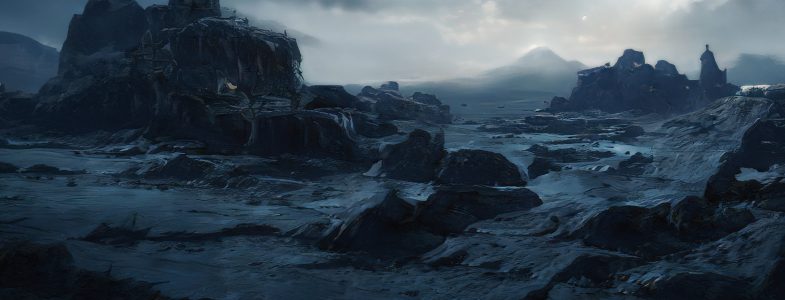

Chapter I – “Servant”
(i)
20 years ago
“I did what you asked. Why must I be reborn?”
Don’t whine. It doesn’t become you. You take the soul of a child because that is how it is done. How it has always been done. Why must you ask every single time?
“Because I forget! Because all I have are your voices. The promises that are never fulfilled. The pain of life. Please. Choose another! I am tired.”
The voices do not speak for several minutes. I am torn between joy that they might grant my request to be allowed to die or if they will bind my mind to silence once more, as they have done many times before when they grow tired of my voice.
It is not that I cannot remember. I know I have lived before – many, many lives. They dropped into my mind the inechi to do so. It awakens each time I grow too old for my body to sustain itself. It is now burning through my soul like a hungry fire.
But I do not recall who I once was. Only that the core of who I am remains intact, lost beneath the layers of all the souls I have eaten. Sometimes I see in dreams – the millennia that has passed – the blur of years and faces.
Who was the first Nyyed?
Who was the boy who tumbled into the ground?
My knees hurt despite the thick pillows upon which I kneel. My back is sore, the muscles strained from the act of staying upright. I feel sick. Sick with age. Sick and tired from age. I am now near my 100th natal day and I am now on the slow crawl to transference.
You sniveling mortals! You disgusting creatures! You were culled from millions of others like you, leading petty, uninspired lives. Destined to die with nothing to show. Our contract is in blood. You suffer as a god suffers – within the existence without end. There is only one thing for you to do and it is the same in each life you live.
“But I cannot do as you ask! I have tried, to no avail!”
Then try harder! You ask to be a god and yet you falter. A god lives longer than there are stars in the sky! You knew; you were warned. Do as you are bid and you will have what you most desire.
I use my staff in my left hand and the heavy armchair to my right to slowly rise, the blood coursing through my numb limbs an agony. I cry out and teeter. One of my acolytes reaches out and steadies me.
I grimace and look away.
Soon. Soon I will have a new body. Soon I will forget this misery until the next time. Until the next century comes to a close. And then this song and dance once more. And then. And then. And then. For one hundred lives. And would joining the pantheon be worth this travail?
My knees buckle and I cry out, but my faithful attendant catches me, lowers me slowly onto the chair.
I feel my bladder give way and the blood rushes to my face.
“Rest now, Eminence,” he says.
His pity seeps through his pores.
I grit my teeth.
Another acolyte enters the chapel bearing a clear glass with an amber fluid, which turns out to be sweet, tart juice. Cool and soothing. A bittersweetness. Will I love it in the next life?
I hand the cup back to the young man and lean heavily upon my staff. I stand.
Urine runs down my legs and drips onto the floor. The sour, musty smell of it rises into the air.
The two acolytes share a look.
I smash the ferrule of my staff against the stone floor and they jump and quickly look away.
My den is across the gardens and down a long corridor filled with doors. I make my way towards the door, my wet underclothes a constant shame.
The gardens are filled with late fall flowers. Their musk dances in the cold breezes rushing from the northwest and bathing my lands with the promise of winter. I will not live to see spring.
“Is the child here?” I ask, hating the thinness of my voice.
“Yes, Eminence. As you directed, he is now three months. Old enough to survive the transference of souls.”
We reach the manor and enter through a side door halfway down the corridor and near my office. Inside, the office is bright. The curtains in front of the glass patio doors have been drawn back, allowing for the late morning light. In the distance beyond the hedges, the trees are filled with a riot of colors as the last of the leaves die and fall.
My faithful assistant – Brother Meyeien – is already in the office and stands next to the desk, the thick book he keeps notes and dictation in on the desktop next to him.
“Meyeien.”
He bows.
“Eminence.”
I make it to my chair and lean heavily upon the edge of the desk. My knees ache with that deep ache of brittle bones.
This is my favorite room in all the rooms of all the properties that I own. It is not large. It is actually small enough that one brazier is sufficient to warm it on cold winter nights. There are lush rugs in the colors of the office of the Order of Theomond – deep blue and black. The walls are a deep maroon, as are the wall-to-ceiling bookshelves built into the walls. There is a small sitting area between the unused fireplace and my desk consisting of two armchairs and an Ottoman between them. It is where Brother Meyeien and I sit in the evenings and discuss matters of faith.
I sit down. My body groans; my bones creak. The smell of urine rushes up to meet me, washes like some vile river over my head.
“Bring the child to the chapel in three days’ time. Bring the mother as well.”
Meyeien bows and hurries away to make arrangements. He is twenty-one and will be in his forties when I am of age to take the holy scepter from the goddess once more.
Whispers as dry as desiccated leaves, the susurrant echoes of ancient beings, wash over the room as the voices stake their place near me.
The acolytes look around, their eyes wide, their faces pale.
Oh yes. Fear. Fear what you cannot see.
None of my priests has seen the transference of souls. They are too young. Those who are too old are not as old as I and have been taken to remote Eysida Valley in the Ti’ha’dem Mountains to end their days there.
There is a sound like a thousand insect feet scuttling along the wooden panels of the walls. The hairs at the nape of my neck rise.
I feel them. The three presences. The three voices. The trinity of my madness.
When the child arrives, his soul will be consumed and yours will rise – ancient and powerful. It is our promise to you.
I do not answer them.
He watches. All the time. Gauging to see when the time is right. There are always priests or acolytes around the child, so the opportunity constantly eludes him. There is another there – another false priest sent to kill the child, to finish what the Order started. Of course he does not know who that other person is. It would endanger the mission if he did. He will probably be captured and tortured but, as he has never seen anyone in the Order, there is no danger of giving them away. As difficult as the task is beginning to seem, there is always the hope that one or the other will succeed.
(ii)
He is young. Twenty-two this past summer and as winter approaches and he has no opportunity, his resolve begins to waver. As passionate as he is about his duty, he fears torture and pain. He is a coward in that way. His brothers are all soldiers but he never wanted that life. Not that he does not want discipline or a place that he could call home. He has always been aimless. Always on the fringes of society.
The Order of Assassins found him when he was cleaning street lamps, climbing ladders throughout the night – taking off the sooty covers that encase oil lamps used to light streets and wiping them down. He did this for two years, feeling more and more despair that he would never rise above this petty job – this job that he could take no pleasure, no pride, in. Not like the other lamp cleaners did. Wasn’t he made for something better? Wouldn’t an early death be preferable to this shame? His father was a successful and wealthy man, but the young man never wanted to be his apprentice, either. He could recall his father railing at him for his inability to commit to something. Anything. He recalled his father’s anguished words, “I’ll do everything so that you succeed, son. Just…just pick something!”
Instead, the young man surreptitiously left home. He could not think of how his father felt. And here he is, his life near an end. He knows that if he succeeds, the priests will find him and his life will be forfeit. But if he does not succeed, the Order of Assassins will kill him. He had been approached in secret and had been recruited by a faceless person. He is sure the Order of Assassins will kill him as easily as the Order of Theomond will.
He is meant to lie. To tell the priests that he has acted on his own, but one look at him and anyone can see that he does not have the heart or passion for murder. Even his faith is a bland thing.
They watch him like raptors watch their prey – constantly; assessingly. Apparently, another attempted to kill the child and died a terrible death. He always knew that the means of dying would always be worse than death itself. And does he fear it? Death? Isn’t it preferable to living aimlessly? And once – and if – he succeeds, won’t the priests constantly hunt him, chase him until he is worn down to a nub, until nothing matters? And can he ever return home? Can he ever place his family in harm’s way?
As the days pass, he feels a strange sorrow. As if his heart has died already. At night, deep into the hours of cold and uncertainty, he tries to resolve this situation. He tries to find a way out. But the only thing that occurs to him is to leave just as silently as he left home. Leave and never look back. If there are others here, then he is redundant. Who cares about a redundant man? An aimless man?
When he joined the Order of Assassins, he had done so to find purpose, but he had been kept at arm’s length. Until – his handler told him – he could be trusted. Until he did this one thing, but now he knows this one thing is an impossibility. If he succeeds, he will be hunted and eventually caught. If he fails, he will be hunted and eventually caught. So, is that not quite the conundrum?
But he cannot smile at the irony. He cannot laugh.
He sits up, cold. His simple cell is icy as winter approaches, but acolytes are not to use heat. Only a rough blanket that offers some warmth but also constant chaffing. He finds that if he sleeps in his robes, he has a modicum of relief but he also attracts the ire, the impatience, of the priests. He hopes he will be thrown out. But that does not seem to be happening either.
Not that the priests say anything to new acolytes. He came already knowing that he was to kill a child. A small person who never hurt anyone. Ever. A new person. Something like a clean slate. So, he questions the sanity of his handler and those who have compelled him here. Has the handler ever seen the members of the Order of Assassins or was it like an onion – layer upon layer of secrecy, of deceit?
He is not sure. He will never know for sure.
Every day is filled with mundane, terribly inane duties. But of them all, he loves gardening. He loves walking among the flowers, the plants, weeding, cutting, shaping. The gardens are filled with a strong fragrance, a strong musk. When he is not watched, when he has the excuse of resting his back, he will close his eyes and find the peace of them, of roots growing deep in the fragrant soil, the nurturing soil, the mother soil. And, with an irony that does make him smile, he knows he has found his calling at the edge of his life.
During the winter of his second year, the days become so bitterly cold that the priests allow all acolytes to have braziers in their small cells. Not that it matters much. The windows are poorly insulated and rattle at every draft. The drafts whistle as they slide through holes and slits. He sits cross-legged on his small cot, the small flame from his small candle throwing shadows along the walls, and his thoughts turn bitter, joyless.
The gardens are slumbering, the plant limbs gray and brittle, the buds that never bloom black, crumbling under even the gentlest of touches. But still he takes the rake out among them and clears the snow. The priests rant at him, hit the back of his head with rulers, pinch his skin. But he never gives up on the gardens nor does he ever lose his love for them.
Every acolyte is given the opportunity, the honor, of caring for the child, and one day – one of those sultry, lazy days of high summer – while he tends the new buds sprouting among the leaves, he hears a commotion from the manor house and straightens quickly, his back giving a twinge of protest. He glances over his shoulder at where voices raise into screams.
Then he sees the struggling acolyte between two burly priests, the acolyte’s dark face ashen, his dark eyes wild, spittle clinging to the edges of his mouth. He gives the young gardener a look of abject terror that makes the young man drop his shears and sit down on the nearest stone bench.
Oh, they have found one. They have found one. The child is safe again.
His heart gives a horrible leap in his chest. With shaking legs and hands, he rises slowly, picks up the shears and returns to his gardening, his thoughts eventually easing into a meditative state, letting go of his fear.
He loves the heat of the sun on his back and head, even while others hide away, standing under awnings, using fans to cool their faces. He waters every plant with precision, with the constancy of love. Has he ever loved anything – anyone – more?
Then one day, when he returns to his cell, after he has washed up at the small washbasin on the small wooden table, the sole window open to allow for the warm breeze, he lies down on his cot, closes his eyes and lets his hand slip under the thin pillow.
He withdraws the hand as if he has been stung by an insect. He pulls the pillow up and sees the small, folded piece of pale paper lying there, like an accusation, like an inconvenience.
Anger rushes through him. The nerve of them taking his gardening away! What has he to do with any of this?
But then, he unfolds the piece of paper and reads it.
“It is up to you. Do this and you are free to return home.”
He knows it to be a lie, but still a hope clings to his chest, his soul. Go home? Go home and see his father, his mother? To wait for his brothers to return home from guarding the city? To join in the feasts of all his acquaintances four times a year?
His eyes prick with unshed tears.
Oh, how he wants this, but not as much as he wants the gardens.
So, he goes to the rector, knocking softly on the large door.
“Come!”
He walks in, his body shaking. There are two other priests there, their faces stern, their eyes cool.
He walks to the rector but his courage fails him again.
He freezes until the rector yells at him to speak up.
“Sir,” he says. “The plants have a pestilence this year. I was wondering –“
The man rises abruptly, his face suffused with rage.
“How dare you! Why are you bringing this to me?”
One of the priests shifts.
“Sir,” he says. “He has no one overseeing him while he caretakes the gardens. He has been doing a good job thus far.”
The rector waves his hand impatiently.
“Well, get him out of here!”
The young man leaves quickly, spilling into the hallway, angry with himself almost to tears at his worthlessness.
“He’s a busy man,” the priest says from behind him.
“I’m sorry. I – I didn’t think.”
Impulsively, he hands the priest the piece of paper.
The priest looks at the paper, frowns, and looks at the young man. He opens the piece of paper, his mouth set in a grim line.
“Who gave you this?” he asks.
“I don’t know. I found it under my pillow.”
After a few seconds, the priest asks, “Were you sent here to kill the Master?”
“Yes. But he’s a child. And…and I love gardening. I’m not a murderer.”
“No. I see you’re not. Go on. Go back to your gardens.”
The young man – elated that he has been brave for once – returns to the gardens, picks up the shears and begins pruning. He loses himself in his work.
Then, near midday, he hears footsteps behind him and sees the shadow of a man just to his right. But when he goes to turn, a hand takes hold of his chin and abruptly twists his head. He hears a strange sound in his very body, in his neck, in his head, and then feels a sharp pain.
The last thought Udat’tha has is to wonder who will take care of the gardens.
(iii)
Three days and nights during which time I am bundled in bed with a fever. Outside the heavy windows, the wind whistles and calls in its heavy voices.
Soon, soon, it says.
This close to the threshold where lives and dimensions thin and collide, I once again feel the fear of death. Had I wanted – had I asked for – that endless silence?
The scurry of laughter along the endless sulci of my brain.
They know I fear to die, even when I weaken and ask them for that mercy. But I am not naïve enough to think they do not grant my request out of concern for me. Who is to know the minds of these eternal creatures?
Meyeien leads a young woman into my office. In her arms lies her three-month son – the vessel for my soul.
She curtsies.
She does not look like the girl. Like the wife I have been promised. But she is beautiful nonetheless – with hair like pale flax and bright gray eyes.
Does the child resemble her?
Inside me, the hungry fire flares and I gasp.
Meyeien is at my side at once.
“Eminence!”
“Time draws near,” I whisper.
He straightens and motions to a tall, burly acolyte who stands at the door.
“Carry his Eminence to the chapel.”
“Must I leave my son?” I hear the girl ask. “Can I not bring him later, when he is older? Surely you cannot train him to be an acolyte this young!”
“This is as the goddess demands,” I hear Meyeien reply cooly. “Do you question the goddess?”
“No! No, of course not!”
“Then come along.”
The acolyte bends and picks me up as easily as if I am a feather or the strand of a hair. He follows behind Meyeien, the mother, and the child. Behind us, the congregation of monks and priests follow in a long line, each carrying a blue and a black candle.
We step out into the frigid gardens lit only by tall torches that have been set into the ground. I can smell the oil they burn. Smoke dances over each flame and dissipates like the last voice in a choir.
I hear the chanting when we near the chapel – the solemn din of many masculine voices. It has always seemed strange to me that the goddess of prophesy and wisdom seeks only men to serve her. But then, she also rules ignorance and retribution.
The chapel is crammed with men. It feels over-hot and stuffy. The odor of sweat and unwashed bodies sicken me. I swallow bile.
The acolyte carries me to the altar, where he gently sets me down. I stand, my body convulsing as he removes my robes, revealing my thin, wasted body and its knobby knees and elbows and ankles. Its too-big head and stringy muscles. He helps me to sit and then to lie down upon the rough, icy stone.
At the jolt of cold, my hearts falters, becomes thready. I become lightheaded as pain bathes my chest and upper back and left arm.
A terrible fear fills me.
The altar is surrounded by candleholders taller than the tallest man. Each fist-size candle has been dyed either blue or black. Despite the bodies in the small space and the candles, I cannot stop shivering.
Goddess help me! I cannot recall exactly, but I know this part is frightening.
The young mother begins to weep.
“No! No! Give me my son!”
I close my eyes.
The child is laid naked upon my chest and I reach up and put my cold claws upon him.
He stirs and squalls.
“He dies and he rises!”
I know the man’s voice. He is from Eysida Valley and heads our order there. He is the most powerful of the priests and I have given Meyeien orders to have him killed and replaced once the ceremony is past. It is dangerous to let men think they are important.
The congregation repeats his words.
“For the glory of Theomond, he dies and he rises!”
“For the glory of Theomond, he dies and he rises!”
“For the glory of Theomond, he dies and he rises!”
“Old soul, new soul, both souls.”
“Old soul, new soul, both souls.”
“Old soul, new soul, both souls.”
“As when the goddess awoke, the new day begins!”
Someone is crying and when the words die, the crying abruptly ceases.
I feel the kiss of cold steel on the skin of my throat and then the bright, hot, sharp pain as the jugulars are cut. As the blood drains from my body, my soul rises on the scent of burning incense and holy herbs. I rise high above the congregation and look down upon my old body and my new body. My spirit exults as it begins to spin slowly, moving down towards the body of the child.
Not yet.
(iv)
1,000 years before
He is young – a boy of ten summers – and he is running behind his older brothers, crying out to them to wait for him, but they laugh and run harder. He stops, sad and angry. Why are they always leaving him behind? They are almost men, his mother is fond of telling him. They are no longer children. Already they are taking an interest in girls and soon I will have to arrange marriages. His mind wanders at his mother’s blathering. What does he care of girls? They are strange – acting different around boys than when they are together. He knows. He has seen them because they ignore him. They all ignore him.
One day no one will ignore him.
Viciously, he pulls a long, thick reed from the ground. The reeds grow next to the lake and when they dance in the air, they hit each other and go “click-click-click.” Almost as if they are laughing. It is a favorite pastime of his to lie on his back on the lake shore and listen to the strange language of the reeds. But he does not want to do that today. Today he wants to hide and make his parents worry. That will make sure they don’t ignore me!
So, he walks along the shore until the reeds fall away, leaving flat, stony land with short grass. There is a dusty path along the land, which starts at the lake shore and continues into woods beyond which, he knows, stands a glen where his people hold gatherings such as weddings and funerals and coming-of-age ceremonies. His twin brothers will be undergoing their ceremony in a fortnight. They will stand next to the high priest while their father slaughters a beast and smears the blood on the boys’ faces and chest. The twins. His father’s favorite children.
He never ever looks at me, the boy thinks. That isn’t right. Isn’t a father supposed to look at his son? And why does Mother not ask why? Why won’t she tell me why?
I’ll tell you why, the wind whispers.
The boy stops, his heart racing, and looks around but there is nobody there, just the flat rocky land and the woods just ahead. The sun is still making its way across the sky, so he slaps the reed against the ground, squares his shoulders, and heads towards the trees.
Around him, the breeze seems to sigh.
Come this way. Come this way, it seems to say.
He stops, unsure, his head cocked, his heart clamoring hard in his chest.
He is going to turn around but then he hears his brothers’ voices.
“Where are you, you little snot?” one calls.
“Mother is worried! Come on!”
Then he drops the reed and takes off towards the tree line. Something inside him warns him that this is not good, that he should turn around and deal with his brother’s taunting and teasing, but he does not want to. He is tired of them – tired of his mother, who only woolgathers; tired of a father who seems to hate him; tired of his brothers who make his life miserable; and tired of his older sister, who only cares about boys. He hates them!
Yes, lad. Come this way!
He pauses just inside the trees and puts his hand against the rough bark of a tree.
“You stupid little snot! If you don’t show yourself, Father is going to beat you!”
He hurries deeper into the woods, hiding behind two thick tree trunks just before his brothers tear through on their way to the glen, their voices echoing. He giggles and the sound of his laughter falls like a stone around him. A cold finger gently rakes up his spine and he shudders.
Something makes him step out away from the trees.
“There you are, you idiot!” one of his brothers calls out.
He turns and runs over and around roots poking through the ground. Ahead, there is a small flat area covered with grass. His brothers yell to him, their voices limned with anger and concern. He runs faster and faster, looking back.
Suddenly, the ground falls away and he stands for a second on air. It takes his mind a second to comprehend but he is already falling down into darkness. As he falls seemingly forever, he sees his brothers peer over the edge of the hole.
“Get Father!”
Then his head hits something hard poking out of the wall of the hole. He hits the ground hard and the air rushes out of him. He lies there for a few minutes, his heartbeat steady, if fast, thrumming in his ears.
He looks around.
The entrance to the hole seems far away and his head hurts horribly. He touches the back of it and his hand comes away wet, but he cannot see what the wet is. Turning his head, he sees two dim tunnels, one on either side of where he lies. A cold, rancid air is seeping from them and he gags and sits up. The world tilts to one side and vomits.
He begins to shake and cry.
“Father is coming! Hold on!”
But his brother’s voice sounds far away.
Father would not come in time.
He has made a stupid mistake and his child’s mind cannot comprehend the magnitude of his error.
His thoughts are jumbled and it is hard to think straight. The pain is so intense.
Then, suddenly, through the fog of his pain, he hears something like the reeds clicking, although this sound is different. All of a sudden, terror makes him stand and he begins to climb, using the roots to pull himself up. He whimpers, a desperation to move. He isn’t moving fast enough!
Beneath him, something screeches.
“What is that?” his brother cries out.
He bends down and holds his hand out to the boy.
“You’re almost there! Take my hand!”
But then the boy makes his second – this time fatal – error. He looks down and even though he can see nothing, he slips and falls, hitting his head again.
He hears a gurgle in the tunnel to his left.
His head moves side to side but something inside of it feels loose, broken. The pain is unbearable and he vomits again.
“Nyyed!” his brother screams. “Nyyed! Try again! Try again!”
But the boy knows he cannot. He will not be able to pull himself up.
He is dying.
You are not, says a soft, whispery voice from his left.
You will live through us. You are our vessel.
Then something takes hold of his right ankle and drags him quickly into the left-hand tunnel.
(v)
The doctor bends over the child’s body.
“Is he well?” Meyeien asks.
“Yes,” the doctor says. “But he should be bundled up and quickly.”
The doctor watches cooly as one of the acolytes wraps the boy in blankets and carries him away.
Meyeien watches as the doctor bends over the woman’s body and feels for her pulse.
The doctor straightens and shakes his head.
Meyeien motions for one of the young acolytes standing nearby.
“Take her to the catacombs.”
The doctor is a monk from Eysida. He walks next to Meyeien as the high priest’s aide leaves the chapel and strides through the dim gardens towards the manor house.
“Have you done what I directed you to do?” Meyeien asks quietly.
“It is taken care of, sir.”
“Good. Have you given any thought to what I asked you?”
The doctor smiles, although his eyes remain cold.
“I am no administrator. I am a doctor and that is what I wish to be.”
“I understand that, but you are loyal. Loyalty is hard to come by, even in our Order.”
“I am neither more nor less loyal than most men who fear the high priest, my lord. Will you take the oath of office now?”
Meyeien smiles.
“Yes and don’t change the subject. I need you there, Lei.”
The doctor does not respond.
“I may not ask next time,” Meyeien warns.
“Then don’t ask and I will acquiesce, but if you ask me, I will refuse every single time.”
“I’ll think on it.”
“You do that.”
Meyeien walks his friend to the front of the manor house and watches as the he boards a carriage along with his aides. The carriage lurches and speeds away through the early dawn.
Around him, men have begun to disperse. Some will take carriages to Bet’sei City a few miles away, while others will remain behind for several meetings to arrange for Meyeien to become the next high priest of the Theomondists.
“Eminence,” a young acolyte says and approaches diffidently.
“I am not high priest yet. What is it?”
“The child is settled. The mother is being interred in the sepulcher next to the old high priest’s body.”
“Good. You are now my aide. Go and bring the rector to me.”
“At once, sir.”
Meyeien makes his way to the high priest’s office and enters slowly. Inside, the smell of old flesh clings to the stuffy air. The old man has not been in here for three days and nights. The papers are in disarray, for he had hurried to complete what could be completed before his death but he had been unable to rearrange the office. Meyeien had been away bringing the child and his mother.
Meyeien begins to straighten the desk. As he does so, his hands shake. He knew this day would come, but no matter what he has done, he feels as unprepared as he has always felt.
There is a knock on the door.
“Come.”
The rector – a handsome, stocky man with black hair beautifully threaded with silver – steps in and bows.
“Eminence.”
“I hear that there was some unforeseen event which took place two days ago.”
The rector bows.
“Yes, my lord.”
There are two monks standing a few feet behind him. They are Eysidan monks – warriors unparalleled by any soldier or mercenary alive. They stand at attention. There are broadswords strapped to their backs and daggers strapped to their thighs. They wear light mail underneath their black robes. The Eysidan monks are of the Order of J’rethem, the god of war and death, among other things. They have a complicated relationship with the Theomondists, for Theomond is J’rethem’s favorite wife.
Meyeien taps the desktop with the tip of his right index finger.
“Tell me.”
“There was a young acolyte, Eminence. He came here and lived here for two years. He came to kill the child.”
“I see. And where is he?”
The rector squares his shoulders.
“Why, I dispatched him, sir.”
“You dispatched him.”
“Yes.”
“Did you interrogate him?”
The rector’s mouth slackens.
“No. He confessed!”
“What did he say when he confessed?”
“He said he wanted to remain here as a gardener, sir. But he was sent to assassinate his Eminence vessel! Surely, I could not let him go.”
“Surely not.”
Meyeien’s eyes glitter with an unreadable emotion.
“So, you did not interrogate him because he confessed.”
The rector swallows.
“Yes, sir. We captured another one the week before.”
“And was that one interrogated?”
“Yes, but he divulged nothing.”
“And why did you not apprise me? I was the high priest’s interrogator.”
“You were away, sir. On his Eminence’s business.”
“Ah. And have we no detention cells.”
The rector wipes the palms of his hands along the sides of his trousers.
“Yes, but –“
“I recall that gardener. He could well have broken under questioning or even divulged what he knew by the mere threat of interrogation. What’s more, he might have been converted to our faith. If he was willing to remain as a gardener, that is.”
The rector says nothing. His hands are fists at his side.
“Answer for yourself!”
The rector jumps.
“Sir…I…I did not think – “
“No. You did not.”
Meyeien stands back from the desk and watches as one of the monks steps forward.
The rector turns quickly and the monk stabs him under his jaw with a dagger. The dagger is pushed up past his face and into his skull.
The monk pulls the dagger out and steps back. The rector falls like a stone to the ground. The monk bends and wipes the blade on the dead rector’s robes.
“You may go,” Meyeien tells the monks.
They bow, bend, and take hold of the rector’s shoulders and feet and carry him out.
Once alone, Meyeien drops onto the desk chair.
The silence is deafening, even though he can hear voices in the distance. The efficient running of the order, where he is but a cog.
His aide arrives and he indicates the chair next to the desk, where he himself once sat to attend to his Eminence.
“You are called Brother Kerei’d, are you not?”
The young man flushes and smiles.
“Yes, Eminence!”
“I’m not high priest yet. ‘Sir’ will do.”
“Yes, sir.”
“How old are you, Kerei’d?”
“Eighteen, sir.”
“The next few years are going to be hard for you. There is much to do. I will ask things of you that you might find difficult to carry out, so I ask you now – will you be my aide or must I choose another? I will ask ruthlessness from you. Heartlessness. Cruelty. And, always efficiency. I do not want self-doubt or questioning. I require absolute trust and obedience. Can you give me that?”
The boy hesitates.
Meyeien leans forward.
“I will ensure that your family is well, Kerei’d. That they never again want for anything. That is what I offer you in exchange for your obedience. But how you forgive or do not forgive yourself is not within my purview or power. I warn you before you answer. You will change and in ways you will likely not want. This I guarantee you, despite the fact that I do not know what I will ask of you. I will give you three days to decide.”
Brother Kerei’d stands.
“I will be your aide, sir.”
Likewise, Meyeien stands.
“I beg you to think carefully.”
“For as long as I can remember, my family has struggled to survive. My mother lost three children to malnutrition. What I can give them now is small and will make little difference. If you can ensure that they are hale and whole, sir, then yes. I will be your aide. I will do what you require of me – whatever that may be. If it is distasteful, if it is horrible, I will find a way to do it.”
“Then I accept your decision. If you encounter any difficulties from any other acolyte or priest, you come to me, but I doubt that you will. Now, go and fetch me something to eat.”
Brother Kerei’d bows and hurries out, closing the door quietly behind him.
“And may the goddess have compassion on your suffering,” Meyeien murmurs.

